 235 South Broad Street, Nazareth, PA 18064
 101 South Broad Street, Nazareth, PA 18064
235 South Broad Street, Nazareth, PA 18064
101 South Broad Street, Nazareth, PA 18064
Because sometimes a little curiosity creates a BIG mess! Brian’s dog Kona explains what to do first, why you shouldn’t add water, and when to call the professionals.
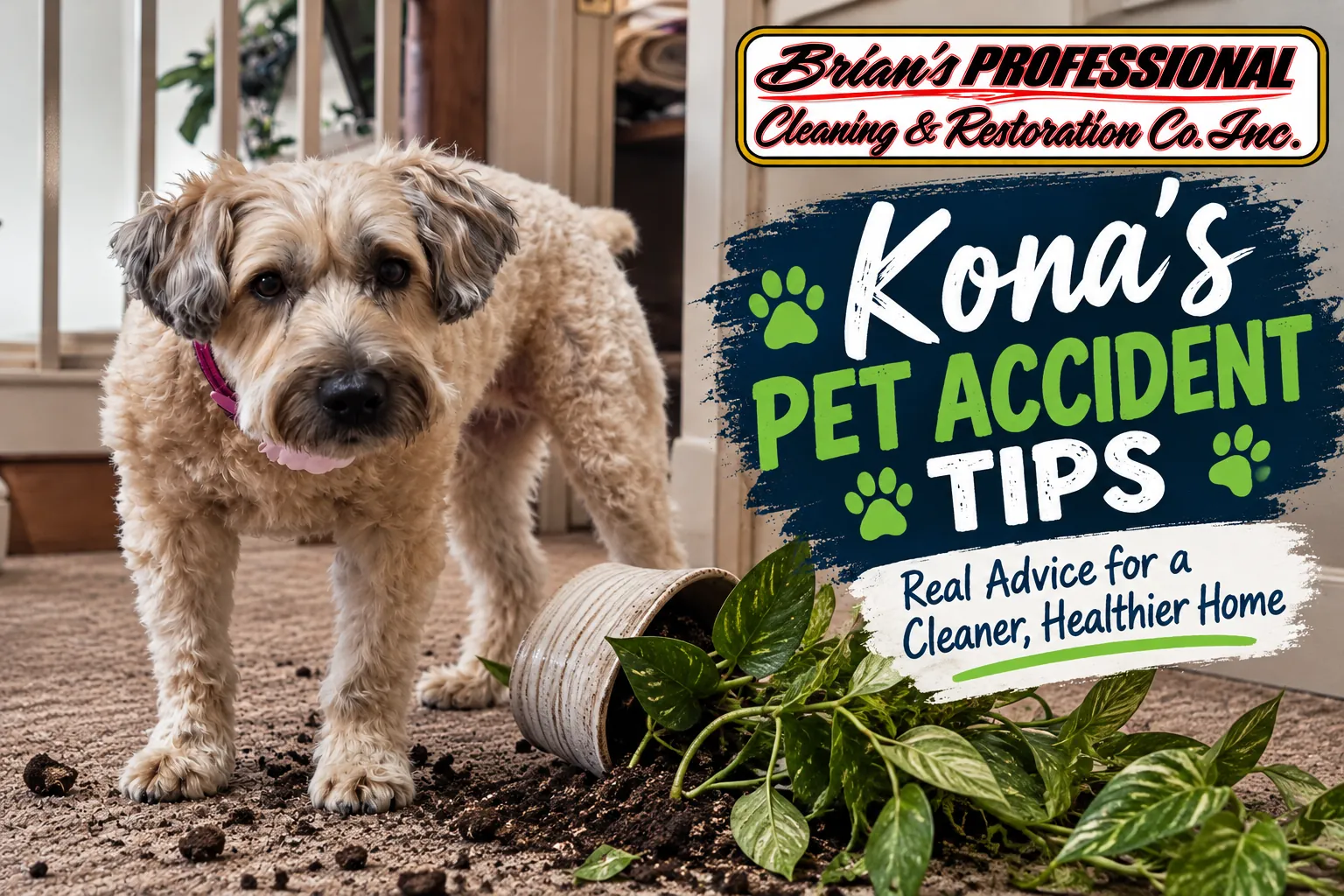
Hi, friends! Kona here! 🐶
So... we need to talk.
You know those pretty green things humans keep around the house? The ones sitting in fancy pots, usually in places that seem absolutely perfect for investigating?
Well, apparently, they’re called houseplants.
And apparently, humans don’t appreciate it when you knock them over.
Who knew?
One minute, I was minding my own business, conducting a very important investigation of a suspicious-looking plant.
The next minute...
CRASH!
There was dirt everywhere. Leaves scattered across the carpet. A flowerpot lying on its side.
And there I stood, looking completely innocent.
Naturally.
But here’s the thing: while knocking over a houseplant might seem like a harmless little accident, cleaning potting soil out of carpet isn’t always as simple as grabbing a vacuum.
My friends at Brian’s Professional Cleaning & Restoration have some helpful advice about handling these messy situations without making things worse.
So grab a treat (for me, obviously), and let’s dig into it!
When a plant tips over onto your carpet, your first instinct might be to grab a wet towel and start scrubbing.
STOP RIGHT THERE!
Potting soil contains fine particles, organic materials, and sometimes fertilizers or other additives.
When you add water to loose soil, you can create mud that works its way deeper into your carpet fibers.
And that innocent little pile of dirt?
It can quickly become a stubborn brown stain.
Here’s what to do first:
Kona’s Pro Tip: If the soil is already wet, don’t try to scrub it away. Carefully lift loose material and blot excess moisture with a clean white towel. Let remaining soil dry before vacuuming, provided it’s safe to leave it in place.
Sometimes, doing less at first actually helps you clean more effectively later!
Here’s something many homeowners don’t realize.
Dry soil is generally much easier to remove from carpet than wet soil.
If the potting soil is damp, vacuuming immediately can smear it around, clog your vacuum, or push fine particles deeper into the fibers.
Instead, after removing the larger debris, allow the remaining soil to dry completely.
Once dry:
Avoid aggressively scrubbing or using a stiff brush that could damage delicate carpeting.
Kona’s Pro Tip: Don’t use your regular household vacuum on wet soil unless the machine is specifically designed for wet pickup.
And remember, if the plant spilled fertilizer pellets, pesticides, or other potentially harmful materials, follow the product’s cleanup instructions rather than spreading them with a vacuum.
Okay, so you’ve picked up the plant, removed the dirt, and vacuumed the carpet.
Everything looks great!
Or does it?
Sometimes potting soil leaves behind discoloration even after the loose material is gone.
That’s because soil can contain organic matter, minerals, and other substances that transfer color to carpet fibers.
And certain types of carpet can be especially sensitive to moisture and cleaning chemicals.
If a stain remains:
Never mix cleaning chemicals, and avoid using bleach or harsh household products unless specifically approved for your carpet.
Kona’s Pro Tip: Just because a cleaning product works on your kitchen floor doesn’t mean it belongs on your carpet!
Some cleaning products can cause permanent discoloration or damage carpet fibers.
Here’s where things can get tricky.
If a large amount of water spilled along with the plant, the problem might go beyond a little dirt.
Water can soak through the carpet and reach the backing, padding, or even the subfloor.
When moisture becomes trapped, it can lead to unpleasant odors, damage to materials, and conditions that support microbial growth.
That’s why properly drying the affected area is so important.
If the spill was substantial, professional moisture assessment and drying may be needed.
Kona’s Pro Tip: A carpet that feels dry on top isn’t necessarily dry underneath!
If you suspect water has reached the padding, don’t ignore it. Contact a professional promptly, especially if the area remains damp.
Now, this tip is especially important for my fellow four-legged investigators.
Not every houseplant is safe for pets.
Some common indoor plants can cause irritation or illness if dogs or cats chew or swallow them.
Examples include:
If your pet knocks over a plant, check whether any leaves, stems, or soil additives were eaten.
If you suspect your pet swallowed a toxic plant or fertilizer, contact your veterinarian or an animal poison control service immediately. Don’t wait for symptoms or induce vomiting unless instructed by a veterinary professional.
Kona’s Pro Tip: Before bringing a new plant home, check whether it’s safe for your furry family members.
I personally think every plant should come with a warning label that says:
"Warning: Kona may investigate."
But apparently, nobody asked me.
Most small, dry soil spills can be handled with careful cleanup and thorough vacuuming.
But sometimes, a knocked-over plant creates a mess that’s a little more complicated.
Consider professional carpet cleaning when:
At Brian’s Professional Cleaning & Restoration Co., Inc., we understand that everyday accidents can happen in any home.
Professional carpet cleaning can help remove embedded dirt, address many common stains, and restore a cleaner appearance to your carpeting.
Not every stain can be completely removed, but proper cleaning methods can improve results while reducing the risk of unnecessary damage.
Look, I understand the appeal.
Plants have interesting smells.
They have leaves that move.
Sometimes they’re sitting in the PERFECT spot for a little nose investigation.
But if you want to prevent another indoor gardening disaster, there are a few things you can do.
Try these simple precautions:
And remember, accidents aren’t always acts of mischief.
Sometimes we’re just curious.
Sometimes our tails have a mind of their own.
And sometimes...
Well...
The plant was clearly in the wrong place.
I’m sticking with that explanation.
So, what have we learned today?
First, houseplants apparently aren’t toys.
Second, humans get surprisingly upset when their living room suddenly looks like a gardening center exploded.
And third, knowing how to clean potting soil out of carpet properly can help prevent a small accident from becoming a much bigger problem.
Remember:
Pick up the debris. Let damp soil dry when appropriate. Vacuum carefully. Treat remaining stains properly. And don’t forget to check for moisture underneath!
Most importantly, keep your furry friends safe around houseplants.
And if that stubborn dirt or stain just won’t go away?
You know who to call!
Until next time, keep those tails wagging, those carpets clean, and those flowerpots standing upright!
Love,
Kona 🐾
Official Pet Accident Correspondent
Brian’s Professional Cleaning & Restoration Co., Inc.
Dirt happens. Let Brian’s Professional help!
From muddy paw prints and spilled potting soil to stubborn stains and everyday carpet cleaning challenges, Brian’s Professional Cleaning & Restoration Co., Inc. helps homeowners throughout the Lehigh Valley care for their carpets.
Professional cleaning can make a real difference when ordinary household methods aren’t enough.
Visit www.briansprofessional.com to learn more about our cleaning services.
Because a happy pet and a clean home can grow together! 🐾
Learn more about our carpet cleaning services →
← Back to all Tips & Guides
Have a question we haven’t answered? Give us a call. Over 40 Years serving Nazareth and the Lehigh Valley, and we’re always happy to help.
Call (610) 759-5518